Commercial Concrete — Liberty, MO
Warehouse and Industrial Floors in Liberty, MO
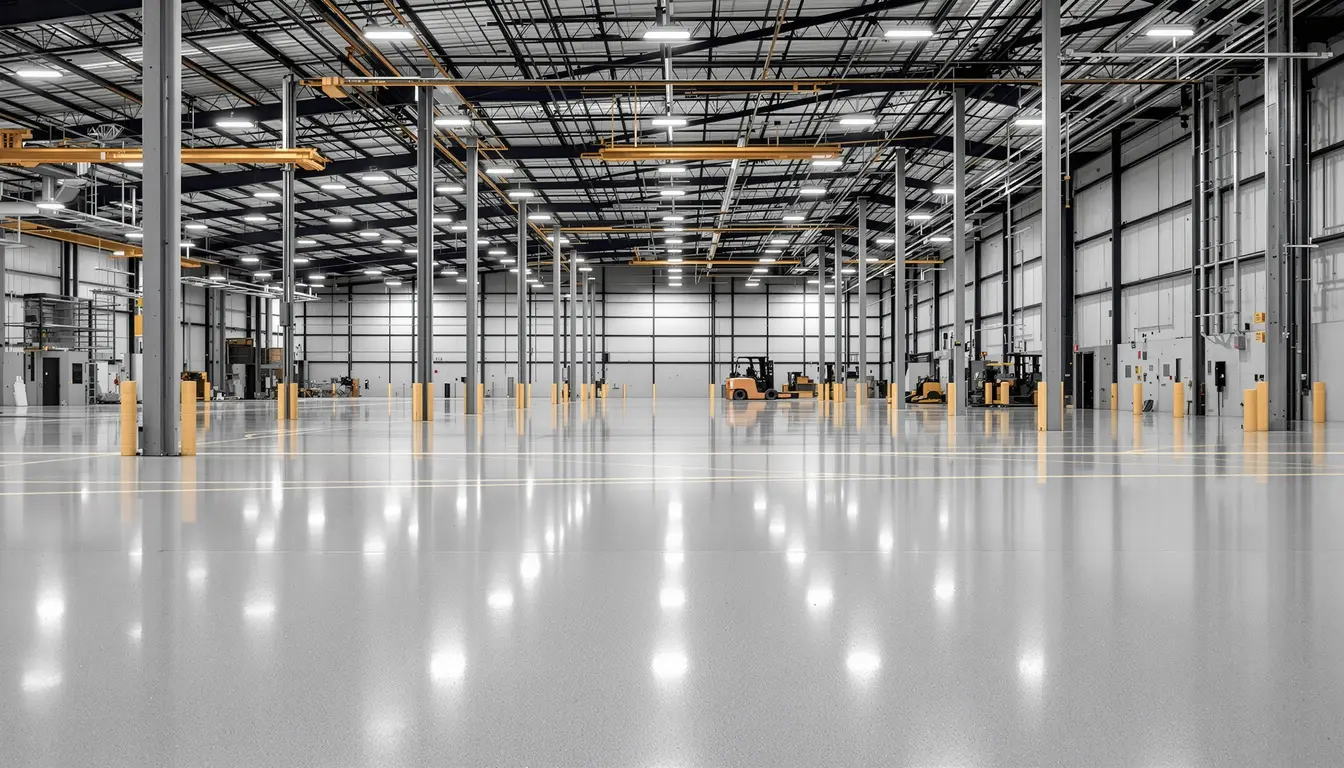
Concrete floors for warehouses, logistics facilities, light industrial operations, and commercial buildings in Liberty and the Kansas City Northland — poured to equipment-load spec with vapor barriers, proper control joint layout, and curing management.
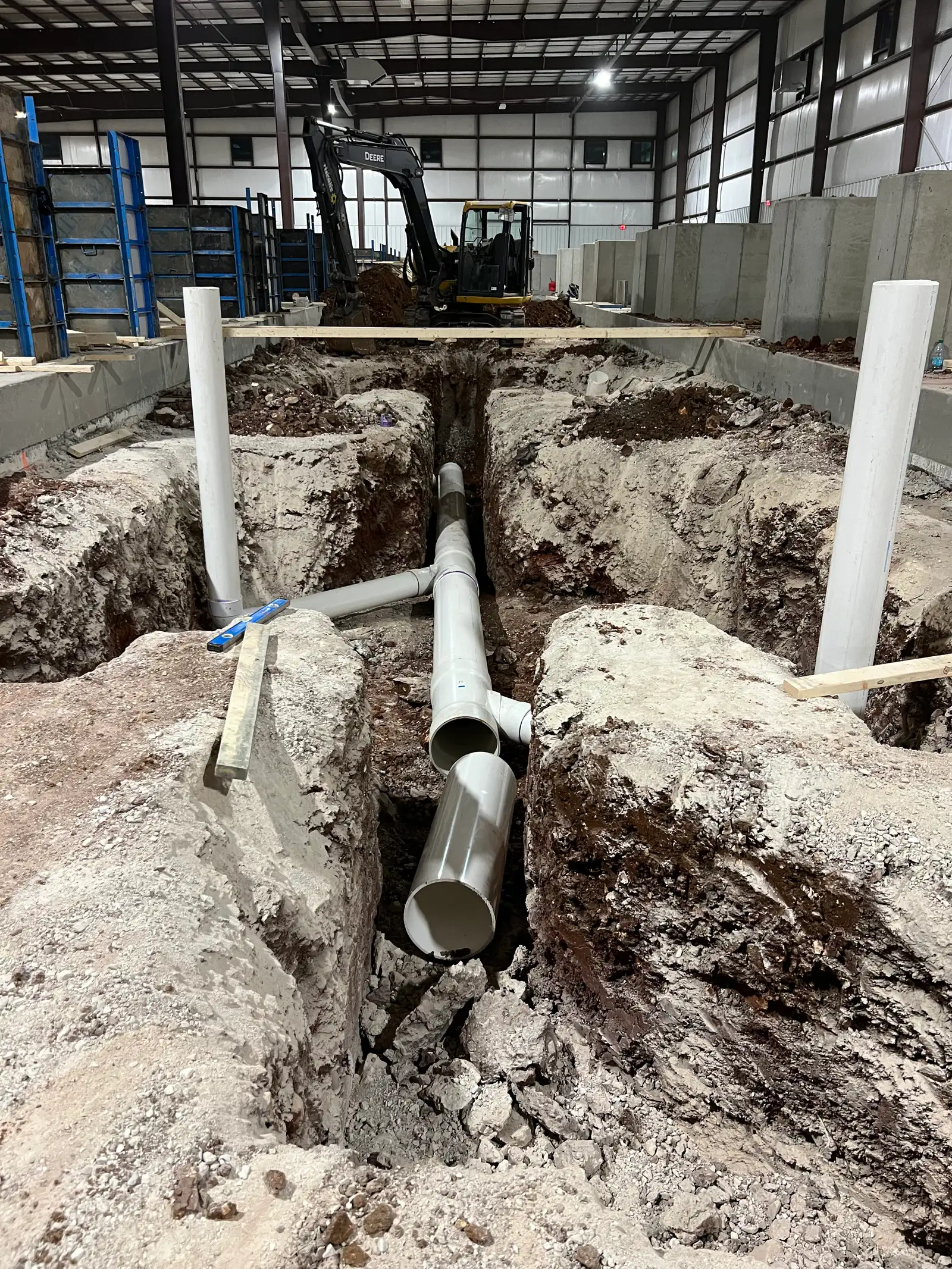
The Finished Result
A floor that holds up under years of equipment and operational loads
Warehouse and industrial floors carry forklift traffic, heavy racking systems, and continuous operational loading that no residential floor ever sees. Getting the PSI spec, vapor barrier, flatness, and joint placement right at the pour determines how the floor performs under those loads for the life of the building.
Request Free EstimateService Overview
What we handle on warehouse floor projects
We pour concrete floors for new warehouse and commercial construction, floor replacement in existing buildings, and industrial floor upgrades. Projects range from smaller commercial buildings to larger logistics and manufacturing facilities in the KC Northland corridor.
- New warehouse floor pours for new construction
- Industrial floor replacement and repair
- High-PSI slabs for forklift and heavy equipment
- Vapor barrier and moisture management under slab
- Joint layout for racking and equipment positioning
- Coordination with steel and building contractors
Common Use Cases
Common reasons to schedule this work
New warehouse or industrial building
New warehouse construction in the KC Northland corridor needs floor concrete poured to the building's operational requirements — PSI spec for the equipment loads, vapor barrier for the building type, and joint layout coordinated with the racking plan.
Floor replacement in an existing building
Existing industrial floors that have cracked extensively, settled unevenly, or no longer meet operational needs for flatness or load capacity need replacement. We coordinate with the building owner on operational sequencing during the pour.
Upgrading to a higher-load floor spec
Operations that have added heavier equipment or higher racking systems sometimes outgrow their original floor spec. Replacement with a higher-PSI pour, more robust vapor barrier, and adjusted joint layout addresses the mismatch.
Moisture and vapor problems under the floor
Concrete floors without vapor barriers or with compromised vapor barriers allow ground moisture to migrate into the slab and the building. Floor replacement with a proper vapor barrier corrects the problem.
Expansion of existing warehouse space
Expanding an existing building often requires pouring new floor sections that tie into the existing slab. Joint planning at the transition between old and new concrete requires care to maintain flatness and load continuity.
Technical Standards
What matters on warehouse & industrial floors projects
PSI spec for equipment loads
Standard residential concrete runs 3,000–3,500 PSI. Warehouse floors that carry forklifts, heavy racking, or industrial equipment typically spec 4,000–5,000 PSI. The PSI requirement is determined by the heaviest concentrated load the floor will see.
Vapor barrier under the slab
A continuous vapor barrier membrane under the floor slab reduces ground moisture migration into the concrete and the building above. For warehouses storing moisture-sensitive goods or where epoxy coatings are planned, the vapor barrier is non-negotiable.
Flatness and levelness requirements
Racking systems and some warehouse operations require floors within specific flatness tolerances (FF) and levelness tolerances (FL). We can discuss flatness requirements and what finishing methods are appropriate for your operational needs.
Control joint layout and racking coordination
Control joints in warehouse floors need to be planned with the racking layout in mind — joints that run under rack baseplate locations create load concentration at a weak point. Joint layout coordination with the building designer or racking supplier is worth doing before the pour.
Cure time before equipment installation
Concrete gains strength continuously, but warehouse floors should see equipment installation after at least 7 days and preferably 28 days of cure. Heavy racking on young concrete concentrates load on a slab that hasn't yet reached design strength. We advise on sequencing.
Liberty, MO Context
Local conditions that affect warehouse & industrial floors in the Northland
KC Northland commercial and industrial growth
Liberty and the KC Northland corridor have seen consistent commercial and industrial development. We're familiar with the site conditions, building contractors, and timing expectations common to this area's commercial construction.
Missouri clay subgrade under commercial facilities
The same clay soil conditions that affect residential concrete apply to industrial floor slabs — sometimes more critically, given the heavier loads. Subgrade compaction under a warehouse floor is a structural requirement, not an option.
Building timeline coordination
Warehouse floors typically get poured after the building shell is enclosed. Coordinating the floor pour with roofing completion, HVAC rough-in, and equipment delivery timelines requires communication with the building contractor. We're experienced at working within those constraints.
The Process
From first call to finished concrete
Call or submit a request
Call (816) 670-4811 or fill out the estimate form. We confirm your area and project basics, then respond same day during business hours.
Free on-site estimate
We come to your property, assess the scope and site conditions, and review subbase and drainage. No charge, no obligation.
Written scope
You receive a written estimate covering the full scope, materials, finish, timeline, and price before any work is agreed. No surprises after the pour.
Prep, form, and pour
We handle site preparation, forming, and the concrete pour to spec — mix design, control joints, finish, and curing management.
Curing and walkthrough
We walk the finished work with you before we leave. Curing instructions and use timelines are included. Questions get answered on site.
What PSI concrete do I need for a warehouse floor?
Most warehouse and light industrial floors spec 4,000–5,000 PSI. The right spec depends on the heaviest concentrated load the floor will carry — forklift axle loads, racking leg loads, or pallet jack concentrated pressure. We can review your equipment loads and recommend the appropriate spec.
How long until equipment can be placed on the new floor?
Light equipment and foot traffic after 7 days. Heavy racking installation and forklift traffic should ideally wait 28 days for full compressive strength. If your project schedule requires earlier access, we can discuss the tradeoffs and what monitoring is appropriate.
Do warehouse floors need a vapor barrier?
Yes, in almost all cases. A vapor barrier under the slab reduces ground moisture migration, which can cause efflorescence, slab deterioration, and problems with floor coatings. For cold storage, food facilities, or any space with moisture-sensitive operations, the vapor barrier is a structural necessity.
Can you pour a new floor in an existing building that's still partially operating?
Yes, with planning. We can sequence pours to keep sections of the building operational while we work in others. This requires coordination on access, equipment staging, and cure time between sections. Call to discuss your specific situation.
Do you provide estimates for commercial floor projects formatted for bid packages?
Yes. We format estimates with the detail needed for commercial project documentation and can work with your project manager on timeline and phasing questions.
We provide warehouse & industrial floors in:
All service areas →Free estimate on your KC Northland warehouse floor project
We coordinate with your building team on PSI spec, vapor barrier, and pour sequencing.