Repair Concrete — Liberty, MO
Concrete Repair and Replacement in Liberty, MO
We assess before we recommend — whether cracked or worn concrete needs repair, resurfacing, or full replacement depends on the underlying cause. We tell you which one actually solves the problem.
The Finished Result
A straight answer on repair or replacement — before any money is spent
The right recommendation depends on what's actually causing the deterioration. Surface-level damage on a structurally sound slab is different from failure driven by subbase movement or drainage problems. We look at the condition, identify the cause, and give you a recommendation that fixes the right problem.
Request Free EstimateService Overview
What we handle on repair and replacement projects
We repair surface damage, apply resurfacing overlays on structurally sound slabs, and fully remove and replace concrete when repair wouldn't be the right long-term answer. Driveways, patios, sidewalks, pool decks, and commercial slabs are all in scope.
- Crack repair and crack filling on stable slabs
- Surface resurfacing overlay on structurally sound concrete
- Full driveway removal and replacement
- Patio and sidewalk section replacement
- Settlement and drainage issue correction
- Trip hazard elimination and code compliance
Common Use Cases
Common reasons to schedule this work
Cracked driveway or patio
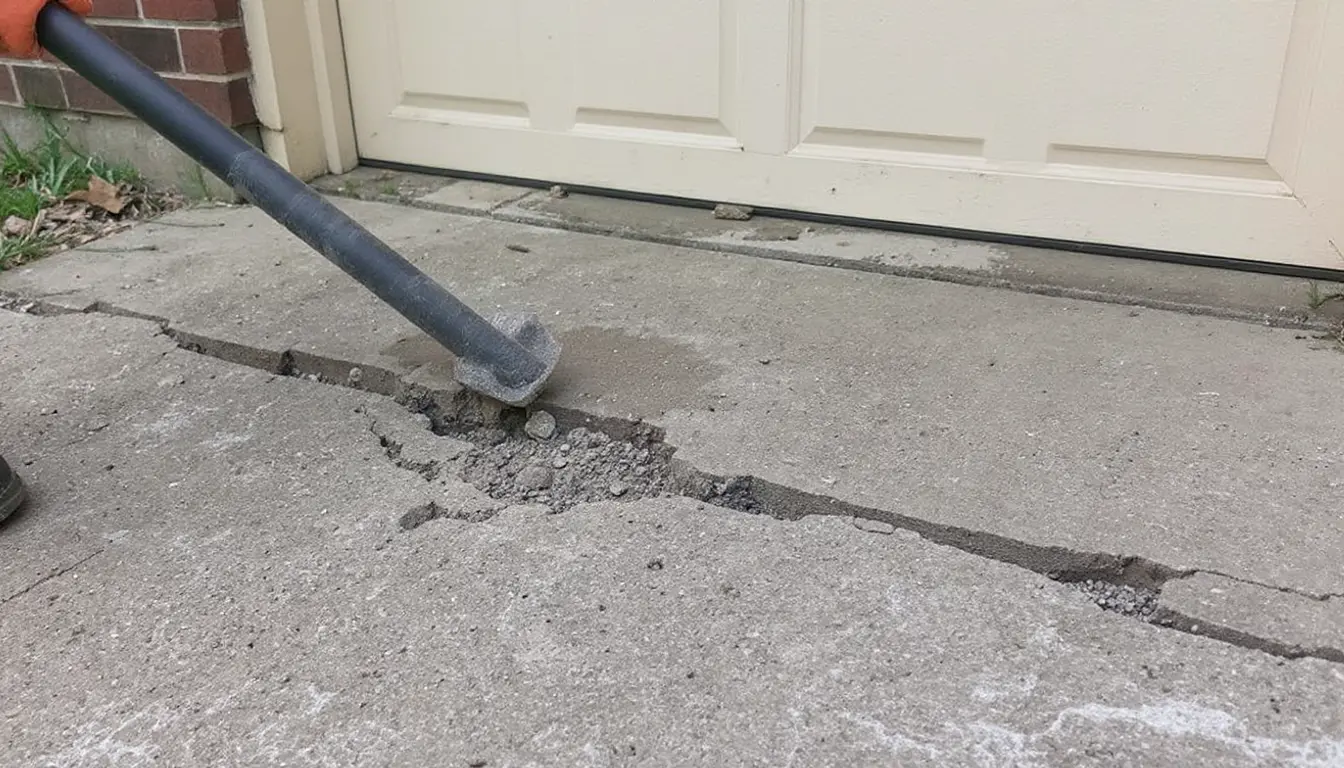
Cracks in driveways and patios range from cosmetic surface cracks to structural cracks driven by subbase failure. The pattern and characteristics of the cracking help determine the right approach — we look at crack width, depth, and whether any differential settlement has occurred.
Surface scaling and spalling
Scaling — where the top layer of concrete peels away in flakes — is typically caused by freeze-thaw damage on concrete that lacked air entrainment, or on concrete that was exposed to deicers before fully curing. Surface-sound slabs with scaling can often be resurfaced.
Settling sections and trip hazards
Sections that have settled lower than adjacent slabs create trip hazards. Depending on how the settlement occurred and how much movement the subbase has undergone, the solution may be mudjacking, section replacement, or full replacement.
Drainage problems causing ongoing damage
Concrete that sits in standing water or that drains toward a structure deteriorates faster than properly graded concrete. Repair that doesn't address drainage is temporary — the damage returns.
Concrete past its useful life
Concrete installed before current mix standards — without air entrainment, without proper control joints, over inadequate subbase — may be at the end of its practical life regardless of surface condition. Replacement with current methods is the cost-effective long-term choice.
Technical Standards
What matters on concrete repair & replacement projects
Subbase assessment before recommending anything
Surface damage is visible; subbase condition requires investigation. We probe for softness, look at crack patterns for settlement indicators, and check whether sections have moved relative to each other. A failing subbase can't be addressed by surface repair.
Crack pattern analysis
Map cracking (a network of small cracks) suggests surface deterioration. Long straight cracks at control joint locations are structural and managed. Diagonal cracking or cracks with differential settlement across them indicate subbase movement or drainage failure.
Drainage assessment
We check whether water is draining away from the slab or pooling on it or against adjacent structures. Damage driven by drainage problems recurs without addressing the grade.
Resurfacing vs. replacement
Resurfacing works when the existing slab is structurally sound — no subbase failure, no drainage problems, no significant settlement. It's a surface treatment, not a structural fix. When the slab has structural issues, resurfacing is a temporary delay, not a solution.
Realistic longevity expectations
We give you honest projections: how long a repair is likely to last given the underlying conditions, versus what replacement delivers. Making that comparison explicit helps you make the right financial decision.
Liberty, MO Context
Local conditions that affect concrete repair & replacement in the Northland
Reading freeze-thaw damage
Surface scaling — where the top layer of concrete flakes away — is the most common freeze-thaw failure pattern in Missouri. It's surface damage when the slab itself is structurally intact. Deeper cracking from subbase movement is a different and more serious problem.
Clay movement and settling
Concrete slabs over Missouri clay settle unevenly as the ground moves through wet and dry seasons. Settlement cracking shows a different pattern than surface deterioration — sections shift relative to each other, creating edges and trip hazards.
Deicer damage is accelerated on young concrete
Concrete that was exposed to deicers in its first winter — before full cure — shows accelerated scaling. Understanding when the damage started helps determine whether repair or replacement addresses the right problem.
The Process
From first call to finished concrete
Call or submit a request
Call (816) 670-4811 or fill out the estimate form. We confirm your area and project basics, then respond same day during business hours.
Free on-site estimate
We come to your property, assess the scope and site conditions, and review subbase and drainage. No charge, no obligation.
Written scope
You receive a written estimate covering the full scope, materials, finish, timeline, and price before any work is agreed. No surprises after the pour.
Prep, form, and pour
We handle site preparation, forming, and the concrete pour to spec — mix design, control joints, finish, and curing management.
Curing and walkthrough
We walk the finished work with you before we leave. Curing instructions and use timelines are included. Questions get answered on site.
How do I know if my driveway needs repair or replacement?
Repair is right for surface-level damage on a structurally stable slab — isolated cracking that hasn't widened, surface scaling without underlying failure. Replacement is right when the subbase has shifted, when sections have settled relative to each other, when cracking is widespread and connected, or when drainage failure is feeding ongoing damage. We assess both options on-site and give you a straight recommendation.
What is concrete resurfacing and when does it make sense?
Resurfacing places a thin concrete overlay over an existing slab, refreshing the surface and finish. It's a good option when the underlying slab is structurally sound but the surface is deteriorated from scaling, deicer damage, or age. It doesn't fix subbase problems, drainage issues, or structural cracking.
How long will a concrete repair last?
Repair longevity depends on what's causing the damage. Surface repairs on a stable slab in good drainage conditions can last many years. Repairs on slabs with ongoing subbase movement or drainage problems will re-deteriorate — the cause drives the outcome, not the repair quality.
Can concrete be repaired to look like new?
Crack repairs and resurfacing improve condition significantly but won't look identical to a fresh pour. Color and texture matching after repair is imperfect. If appearance matters as much as function, full replacement gives the cleanest result.
Does sealing prevent cracking?
Sealing reduces water penetration, which reduces freeze-thaw damage and deicer-related scaling. It doesn't prevent cracking from subbase movement or structural causes. Regular sealing is one of the best ways to extend concrete life; it's not a substitute for correct installation.
We provide concrete repair & replacement in:
All service areas →Free assessment — repair or replacement, we tell you which makes sense
On-site estimate with a clear recommendation before any work is agreed.