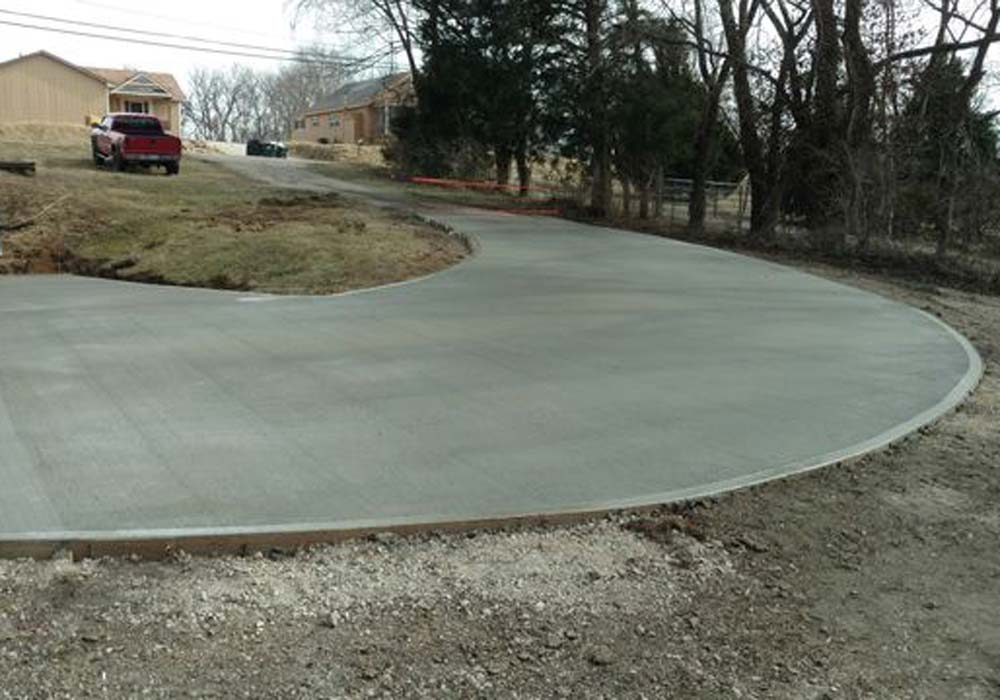
Residential Concrete — Liberty, MO
Concrete Driveways in Liberty, MO
New driveways and driveway replacements for Liberty and Northland homes — poured with proper subbase compaction, air-entrained mix for Missouri's freeze-thaw climate, and control joints placed to spec.
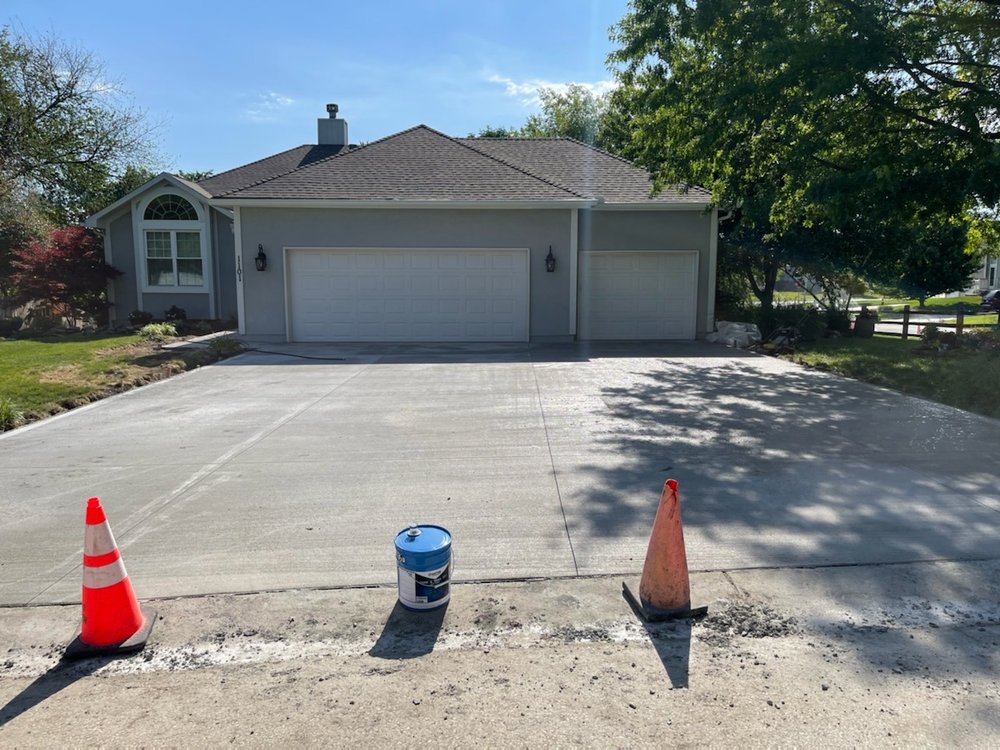
The Finished Result
A driveway that handles Missouri winters and looks good doing it
A well-poured concrete driveway sheds water cleanly away from the garage, handles decades of vehicle traffic without major cracking, and holds its surface through Missouri's freeze-thaw cycles. Getting there requires the right base, the right mix, and the right joint placement from the start.
Request Free EstimateService Overview
What we do on driveway projects
We install new driveways for new construction and replace existing ones. Most common scopes include full remove-and-replace, new pours for homes that don't have existing concrete, driveway widening, extensions to reach detached garages, and RV and extra parking pads.
- Standard two-car driveways (16×20 to 24×40 ft typical)
- Driveway widening and added lanes
- Extensions to detached garages or workshops
- RV pads and additional parking areas
- Concrete aprons at garage entries
- Replacement of cracked or settled existing driveways
Common Use Cases
Common reasons to schedule this work
Existing driveway is cracked or settling
Missouri clay soil movement is a primary cause of driveway failure. When a slab settles unevenly or cracks are widening, it signals subbase problems that surface repair won't fix. Replacement addresses the underlying issue.
New construction finishing the yard
New builds in Liberty subdivisions typically get their driveways poured after landscaping is roughed in. We coordinate with your grade and drainage plan before forming begins so the driveway integrates correctly from the start.
Need more parking space
A wider driveway or separate concrete pad solves a parking problem permanently. We can extend an existing driveway, add a parallel lane, or pour a separate RV or overflow pad.
Surface is scaling from deicer damage
Road salt and deicers accelerate surface deterioration on concrete that wasn't sealed or wasn't fully cured before winter. Surface-sound slabs can often be resurfaced; those with structural failure warrant replacement.
No concrete access to a detached structure
Detached garages, workshops, and sheds without a concrete path create year-round muddy access issues. A concrete driveway extension or connecting pad solves it permanently.
Technical Standards
What matters on concrete driveways projects
Subbase compaction
The most common cause of early driveway failure is inadequate subbase preparation. Missouri clay requires thorough compaction — a slab poured over soft or uneven subgrade will settle and crack regardless of concrete quality.
Air-entrained concrete mix
Missouri driveways face 20–30 freeze-thaw cycles annually. Air-entrained concrete — with small intentional air bubbles in the mix — allows water to expand as it freezes without damaging the slab surface. It's the standard for any exterior pour in this climate.
Control joint placement
Concrete cracks. Control joints — saw-cut at regular intervals — direct cracking to planned locations where it doesn't affect function or appearance. Joints spaced too far apart or missing mean the concrete cracks wherever stress concentrates.
Drainage slope
A driveway that holds water accelerates freeze-thaw damage and creates ice hazards near the garage. We grade every pour to drain away from structures and confirm drainage direction before forming.
Thickness for vehicle use
Standard residential driveways are poured at 4 inches. Driveways expected to carry heavier loads — RVs, trailers, commercial vehicles — need 5–6 inches and may benefit from rebar in addition to mesh.
Liberty, MO Context
Local conditions that affect concrete driveways in the Northland
Missouri clay soil and subbase movement
Liberty's clay-heavy soil expands when wet and contracts in dry periods. That seasonal movement puts stress on concrete slabs that don't have a properly compacted, stable base beneath them. Subbase preparation determines whether a pour holds up for decades.
Freeze-thaw cycling
The Kansas City metro sees 20 to 30 freeze-thaw cycles in a typical winter. Concrete poured without proper air entrainment absorbs water, which expands when frozen and damages the slab. Air-entrained mixes for exterior pours are non-negotiable in Missouri's climate.
Drainage and slope
Standing water on exterior concrete accelerates freeze-thaw damage and creates safety hazards. We grade every pour to drain away from structures and confirm drainage direction before forming begins.
Deicer and salt exposure
Road salt and deicing chemicals accelerate surface scaling, especially on concrete that wasn't sealed or wasn't fully cured before cold weather arrived. We seal exterior pours as part of the project and provide deicer guidance for the first winter.
The Process
From first call to finished concrete
Call or submit a request
Call (816) 670-4811 or fill out the estimate form. We confirm your area and project basics, then respond same day during business hours.
Free on-site estimate
We come to your property, assess the scope and site conditions, and review subbase and drainage. No charge, no obligation.
Written scope
You receive a written estimate covering the full scope, materials, finish, timeline, and price before any work is agreed. No surprises after the pour.
Prep, form, and pour
We handle site preparation, forming, and the concrete pour to spec — mix design, control joints, finish, and curing management.
Curing and walkthrough
We walk the finished work with you before we leave. Curing instructions and use timelines are included. Questions get answered on site.
How much does a concrete driveway cost in Liberty, MO?
A standard two-car driveway in Liberty runs $3,500–$7,200 installed, depending on size, thickness, finish, and site conditions. Larger driveways, sloped sites needing extra grading, and decorative finishes cost more. We provide a written on-site estimate so you have an accurate number.
How long does concrete driveway installation take?
Most standard residential driveways take one to two days to form and pour. Removal of existing concrete adds time. Vehicle use requires 7 days of curing — we give you the full timeline at the estimate.
Should I repair or replace my driveway?
Repair makes sense for surface-level damage on a structurally sound slab. Replacement is right when the subbase has shifted, when cracking runs through the full slab depth, or when drainage has been compromised. We assess both at the estimate and give you a straight recommendation.
Can I widen an existing concrete driveway?
Yes. We pour an additional section adjacent to the existing slab. The new pour won't bond to the old — that's expected and managed with a planned control joint at the seam. The result is structurally sound and visually clean.
What time of year is best to pour a driveway in Missouri?
Spring through early fall gives the best curing conditions. We can pour in cooler weather with appropriate precautions, but avoiding pours that cure through hard freezes is the goal. If you're scheduling in fall, we'll discuss timing and the curing window at the estimate.
We provide concrete driveways in:
All service areas →Free estimate on your Liberty driveway project
We come to your property, assess the scope, and give you a written number before any work is agreed.