Residential Concrete — Liberty, MO
Pool Decks in Liberty, MO
Concrete pool decks for safer poolside circulation, better backyard presentation, and a surface that handles Missouri's seasonal temperature swings without heaving or scaling.
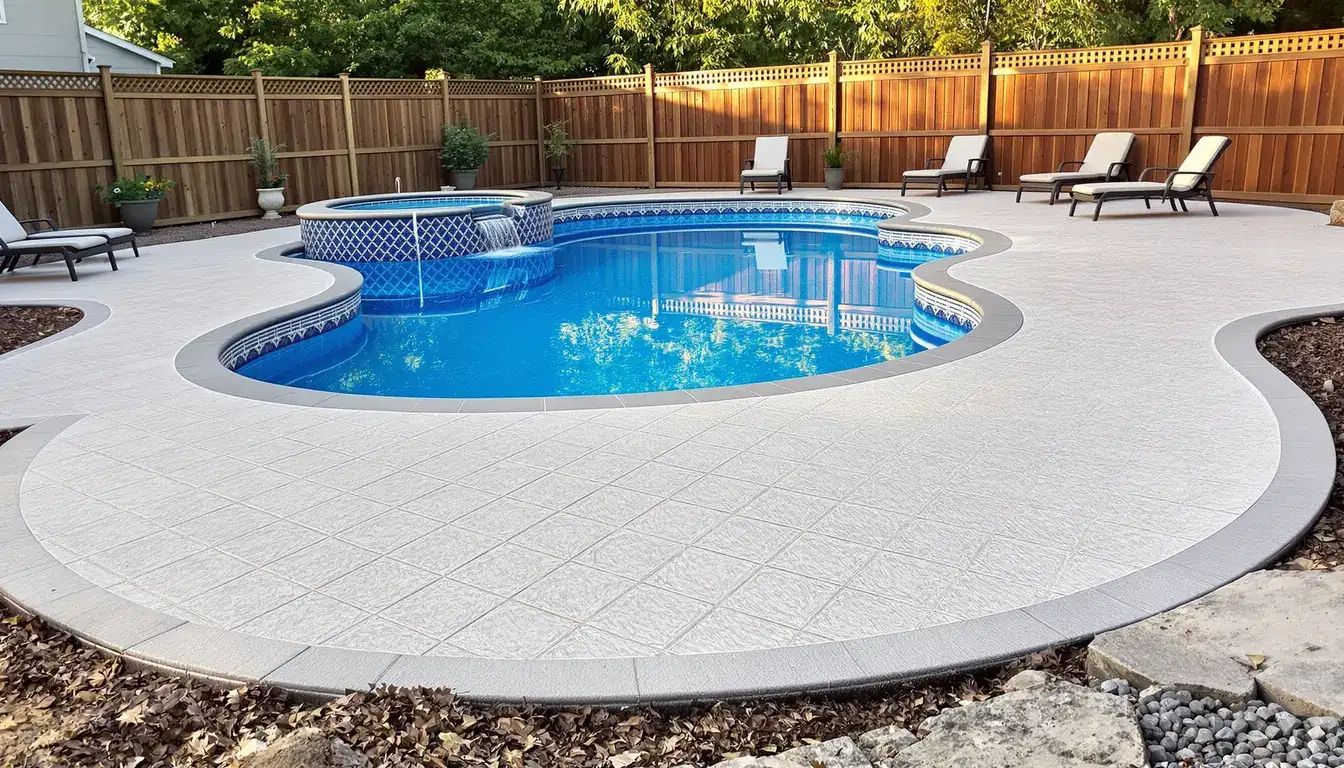
The Finished Result
A clean, safe pool surround that works through every season
A properly poured pool deck drains away from the pool structure, stays slip-resistant when wet, and holds its surface through Missouri winters. Expansion joints near the pool shell allow movement without cracking the deck or the coping. Getting the drainage slope and joint placement right from the start determines how the deck performs long-term.
Request Free EstimateService Overview
What we handle on pool deck projects
We pour concrete around in-ground pools — full perimeter decks, partial surrounds, additions to existing decks, and connections from pool decks to adjacent patios or yard areas. Pool deck pours differ from standard patios in their drainage requirements, expansion joint planning, and finish selection.
- Full pool perimeter concrete decks
- Partial deck sections and additions
- Pool-to-patio concrete connections
- Pool deck replacement for existing pools
- Resurfacing for structurally sound existing decks
- Coping transition and border areas
Common Use Cases
Common reasons to schedule this work
Finishing a new pool installation
New in-ground pools need a concrete surround for safe poolside movement and a finished backyard. Pool decks are typically poured after the pool shell is complete and backfill has had time to settle.
Replacing cracked or heaved pool decking
Old pool decks develop trip hazards from frost heave, crack from subbase movement, or deteriorate from chemical exposure. Replacement provides a clean, level surface with correct drainage and slip-resistant finish.
Expanding a narrow existing deck
Original pool decks are sometimes too narrow for comfortable use. Adding width creates room for furniture, safer poolside circulation, and better backyard flow around the pool.
Improving slip resistance
Worn or smooth concrete around a pool is a slip hazard. Resurfacing with a textured finish improves safety significantly. Full replacement also allows choosing a better finish from the start.
Connecting pool deck to an adjacent patio
When a pool deck and backyard patio are separate, tying them together with concrete creates a unified outdoor floor and cleaner traffic flow. We plan control joints at the connections.
Technical Standards
What matters on pool decks projects
Drainage away from the pool structure
Water pooling against a pool shell is a long-term problem. Pool decks are graded to drain away from the pool, toward appropriate drainage points. We confirm drainage before forming — not after.
Slip-resistant finish
Smooth concrete is dangerous when wet. Broom finish provides adequate grip for poolside use. Exposed aggregate and some stamped patterns are also appropriate. We don't pour pool decks with untextured finishes.
Expansion joints near the pool shell
The pool shell and the concrete deck move independently. Expansion joints between the deck and pool coping allow that movement without cracking either surface. These are planned before forming begins.
Sealant for chemical exposure
Pool water chemistry — particularly chlorine — affects concrete and standard sealants over time. We use sealant appropriate for pool deck environments.
Control joint planning for irregular shapes
Pool decks often follow curved pool shapes, creating irregular slab geometry. Control joint layout for non-rectangular slabs requires more planning than standard rectangular pours.
Liberty, MO Context
Local conditions that affect pool decks in the Northland
Missouri clay soil and subbase movement
Liberty's clay-heavy soil expands when wet and contracts in dry periods. That seasonal movement puts stress on concrete slabs that don't have a properly compacted, stable base beneath them. Subbase preparation determines whether a pour holds up for decades.
Freeze-thaw cycling
The Kansas City metro sees 20 to 30 freeze-thaw cycles in a typical winter. Concrete poured without proper air entrainment absorbs water, which expands when frozen and damages the slab. Air-entrained mixes for exterior pours are non-negotiable in Missouri's climate.
Drainage and slope
Standing water on exterior concrete accelerates freeze-thaw damage and creates safety hazards. We grade every pour to drain away from structures and confirm drainage direction before forming begins.
Deicer and salt exposure
Road salt and deicing chemicals accelerate surface scaling, especially on concrete that wasn't sealed or wasn't fully cured before cold weather arrived. We seal exterior pours as part of the project and provide deicer guidance for the first winter.
The Process
From first call to finished concrete
Call or submit a request
Call (816) 670-4811 or fill out the estimate form. We confirm your area and project basics, then respond same day during business hours.
Free on-site estimate
We come to your property, assess the scope and site conditions, and review subbase and drainage. No charge, no obligation.
Written scope
You receive a written estimate covering the full scope, materials, finish, timeline, and price before any work is agreed. No surprises after the pour.
Prep, form, and pour
We handle site preparation, forming, and the concrete pour to spec — mix design, control joints, finish, and curing management.
Curing and walkthrough
We walk the finished work with you before we leave. Curing instructions and use timelines are included. Questions get answered on site.
How much does a concrete pool deck cost in Liberty, MO?
Pool deck cost depends on size, shape, and finish. Plain broom-finish concrete runs $8–$14 per sq ft around the pool perimeter. Decorative finishes cost more. We estimate on-site based on your pool dimensions and intended scope.
What's the safest finish for a pool deck?
Broom finish is the most practical — it's textured enough for grip and holds up well. Exposed aggregate is also popular and slip-resistant. Stamped concrete is available and attractive but should include a non-slip additive in the sealer.
How soon can I use the pool after a new deck is poured?
The deck is ready for foot traffic in 24–48 hours. Pool use timing depends on when the pool itself is ready. We give you the complete deck curing schedule at project completion.
Can an existing pool deck be resurfaced instead of replaced?
Yes, if the existing deck is structurally sound. Resurfacing places a fresh concrete overlay over the existing slab. It's not appropriate for decks with subbase problems, active cracking, or drainage issues — those warrant replacement.
What causes pool decks to crack and heave?
The most common causes in Missouri are frost heave (seasonal ground movement from freeze-thaw), subbase settlement, and drainage problems that trap water under the slab. Understanding the cause is part of deciding between repair and replacement.
We provide pool decks in:
All service areas →Also Available
Need a pool before the deck?
We install fiberglass pool shells and pour the concrete deck around them — one contractor, one coordinated project. Browse 33 fiberglass pool models across three series in our catalog.
Browse the Pool Catalog →Free estimate on your Liberty pool deck project
We assess drainage, finish options, and scope on-site before any work is scheduled.